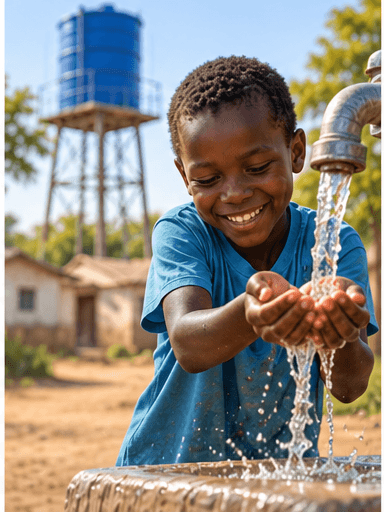
For communities affected by displacement, unreliable water creates problems far beyond inconvenience.
A failed supply can force families to spend scarce money on emergency water, travel farther to collect it and face greater health risks when safer sources are unavailable.
The Regional Programme on Water and Sanitation for Refugees, Internally Displaced Persons and Host Communities in East Africa—known as R-WASH—was designed to make services more reliable and sustainable in participating communities.
UNICEF and UNHCR implemented the program in Ethiopia, Somalia and Sudan with German support.
An evaluation released in June 2026 found that more than 243,000 people had received water services, exceeding the program's target by over 20%.
The work included rehabilitation of water networks, solar-powered systems and infrastructure managed with local utilities rather than relying only on repeated emergency delivery.
In Somalia, the share of households experiencing 24-hour interruptions fell from 83% to 38% in participating locations.
Water-production costs declined by 22% in Sudan and 16% in Somalia, improvements that can make continued operation more affordable after initial construction is complete.
The result matters because it combines reach with signs of improved reliability and cost—not simply a pledge to build future infrastructure.
For hundreds of thousands of people in the program areas, a basic service became more dependable.