Independent editorial publication

Editions · September 6, 2026

The Good in the World

A clearer view of human progress.

Health & Medicine

A personalized mRNA treatment has succeeded in a Phase 3 melanoma trial

Intismeran combined with Keytruda met its main goals in 1,137 high-risk melanoma patients, reducing recurrence and distant spread compared with Keytruda alone. Detailed results and overall-survival data are still pending.

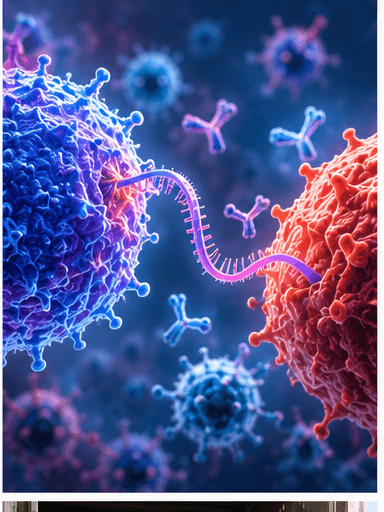
Editorial illustration of an mRNA strand between immune and cancer cells, representing personalized melanoma treatment research.
Editorial illustration. This image does not depict the actual event.

A personalized mRNA treatment combined with Keytruda has met the main goals of a Phase 3 trial involving 1,137 people whose high-risk melanoma had been surgically removed.

The combination improved recurrence-free survival and distant-metastasis-free survival compared with Keytruda alone, with no new safety signals reported. It is an important late-stage result, but the treatment is not yet approved and detailed results remain unpublished.

Most medicines are manufactured in the same form for every patient. Intismeran is designed differently.

Researchers analyze mutations in an individual patient's tumor and use that information to create an mRNA treatment intended to train the immune system to recognize that person's cancer.

Moderna and Merck are testing intismeran alongside Keytruda, an established immunotherapy, in people with high-risk stage IIB through IV melanoma whose tumors had been completely removed by surgery.

The Phase 3 INTerpath-001 study enrolled 1,137 patients. Participants received either Keytruda with the personalized mRNA treatment or Keytruda alone.

According to the companies' interim announcement, the combination met the trial's primary endpoint of recurrence-free survival and a key secondary endpoint measuring survival without distant metastasis. They also reported no new safety signals.

That moves the approach beyond an encouraging smaller trial and through its first successful large, late-stage test in melanoma.

But the most important numbers have not yet been presented publicly. The companies have not disclosed the Phase 3 effect size, detailed safety findings or overall-survival results.

The trial is also still ongoing, and regulators have not decided whether the evidence supports approval.

This is therefore progress at a clearly defined stage: a personalized mRNA cancer treatment has cleared a major clinical hurdle, while the fuller evidence and regulatory judgment still lie ahead.

What to Keep in Perspective

Intismeran is experimental and is not currently an approved melanoma treatment.

Meeting trial endpoints tells us the combination performed better on the specified measures, but the detailed magnitude of benefit has not yet been fully presented. Overall-survival results are not available.

Regulatory review, complete data and longer follow-up are still needed before the result can become routine patient care.

The reporting for this story draws on the following scientific, institutional and independent sources.

Development date
August 19, 2026
First published
September 6, 2026
Updated
No updates
Last reviewed
September 6, 2026