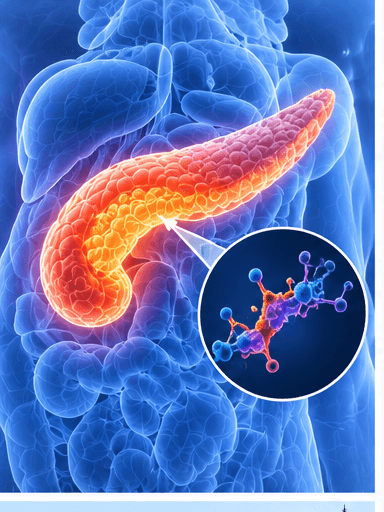
Pancreatic cancer is difficult to treat partly because it is often discovered after it has spread and because many tumors are driven by proteins that medicine has struggled to target.
RAS proteins help regulate how cells grow. When the genes controlling them are mutated, those signals can become stuck in an active state and help cancer cells keep multiplying.
Daraxonrasib is a first-in-class inhibitor of the RAS GTPase family. On August 26, 2026, the FDA approved it under the brand name Rasonque for adults with metastatic pancreatic adenocarcinoma who have received at least one prior systemic therapy or who are not candidates for multiagent systemic therapy.
The approval rests on RASolute 302, a randomized, open-label trial involving 500 patients. Half received daraxonrasib and half received a physician's choice of standard chemotherapy.
Across the overall trial population, median overall survival reached 13.2 months with daraxonrasib, compared with 6.7 months with standard care. Median progression-free survival was 7.2 months versus 3.6 months, and 30% of patients responded to daraxonrasib compared with 11% in the chemotherapy group.
Those figures do not mean every person gained the same amount of time. A median divides a study group in half, and individual outcomes can differ substantially.
They do show that the treatment produced a large, statistically significant improvement across several important measures in a randomized comparison—the kind of evidence that can move an idea from promise into clinical practice.
The drug is taken as a tablet once daily until the cancer progresses or side effects become unacceptable. Its prescribing information includes warnings for serious toxicities, including lung inflammation, gastrointestinal perforation and other complications that require medical monitoring.
The most defensible reason for optimism is specific: patients facing a historically difficult advanced cancer now have an approved treatment option that performed substantially better than the comparison therapies in this trial.